
About the movie
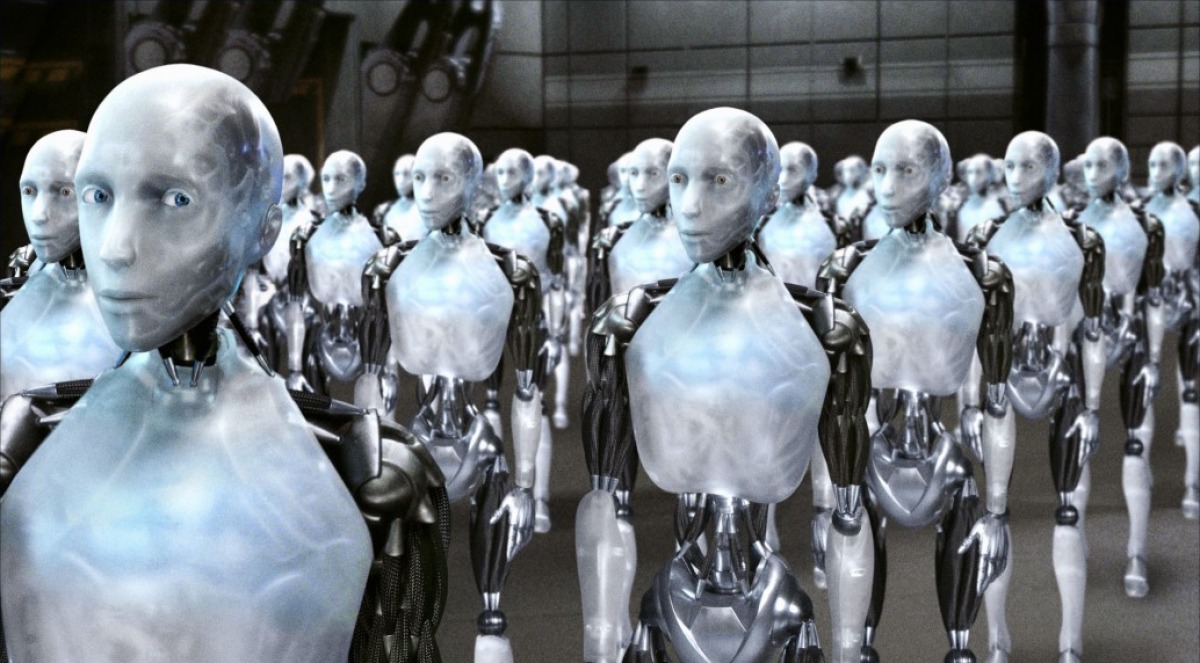
I, Robot, released in 2004, is a sci-fi thriller set in the year 2035 in Chicago. The film is based on a future where humans rely heavily on robots. These robots live in citizens’ houses, and they’re able to make life or death decisions regarding humans in dire situations. However, these robots are all programmed to follow very strict rules, one of those rules being, “A robot may not injure a human being or, through inaction, allow a human being to come to harm.”
The main character, a detective named Del Spooner, has a traumatic history with these robots, so he doesn’t trust them. He is tasked with investigating a murder in which he suspects a robot has committed, thus defying the laws of robotics. As he uncovers the truth behind the murder, he learns about a corrupted, more advanced Artificial Intelligence (AI) that has been controlling the robots.
The reimagined alternative
Ultimately, throughout the film, Spooner questions the “hierarchy between humans and robots from the perspective of who is in control.”
I, Robot reimagines the current state of cultural, social, and economic conditions focusing primarily on the use of technology. In the film, humans delegate a lot of their decision making to robots, and robots serve humanity in any way possible. Robots can be held accountable for their actions, and they also monitor humans to a point where they’re under constant surveillance. It’s a world where almost everyone in society trusts the government, scientists, and tech giants blindly.
All of these characteristics helped keep a positive environment in the film, but the second a robot “gained consciousness,” things went south very quickly.
Would this alternative require technological or systemic change?
Yes, the economy in I, Robot would require major technological and systemic change.
First and foremost, great advances in technology would need to be made in order to have such high performance service robots of that capacity. Then, detailed ethical guidelines would need to be implemented into the AI systems, as well as the proper moral principles.
When it comes to feelings towards privacy and safety online and with technology, 86% of Americans feel as though they have no control over how data about them is being used. 84% say they don’t feel they have control over who is collecting and using their data. So, I would say that intricate safety measures would be incredibly important when using AI.
Systemically, a tech-savvy world like the one in I, Robot would require the government to ensure that all citizens have the media literacy required to function in a world that so heavily relies on AI. Additionally, they would need to educate their people on all aspects of AI like how it collects data, the risks when using it, etc.
Does this alternative reflect current conditions or is it all reimagined?
Because I, Robot is set in a future that we still have not reached yet, a lot of the elements in this alternative are based on an entirely reimagined condition. As of 2024, we do not rely on AI to make critical, life or death decisions on our behalf like they do in the film. I would say that is the biggest difference between the film and the real world.
However, Spooner’s concerns over just how much control we should give to robots is prevalent in today’s society. In the film, robots and AI have taken over many human jobs. This is something we’ve seen happen more and more in today’s society, and research shows that technology is one of the biggest drivers of job loss.
Leave a Reply